
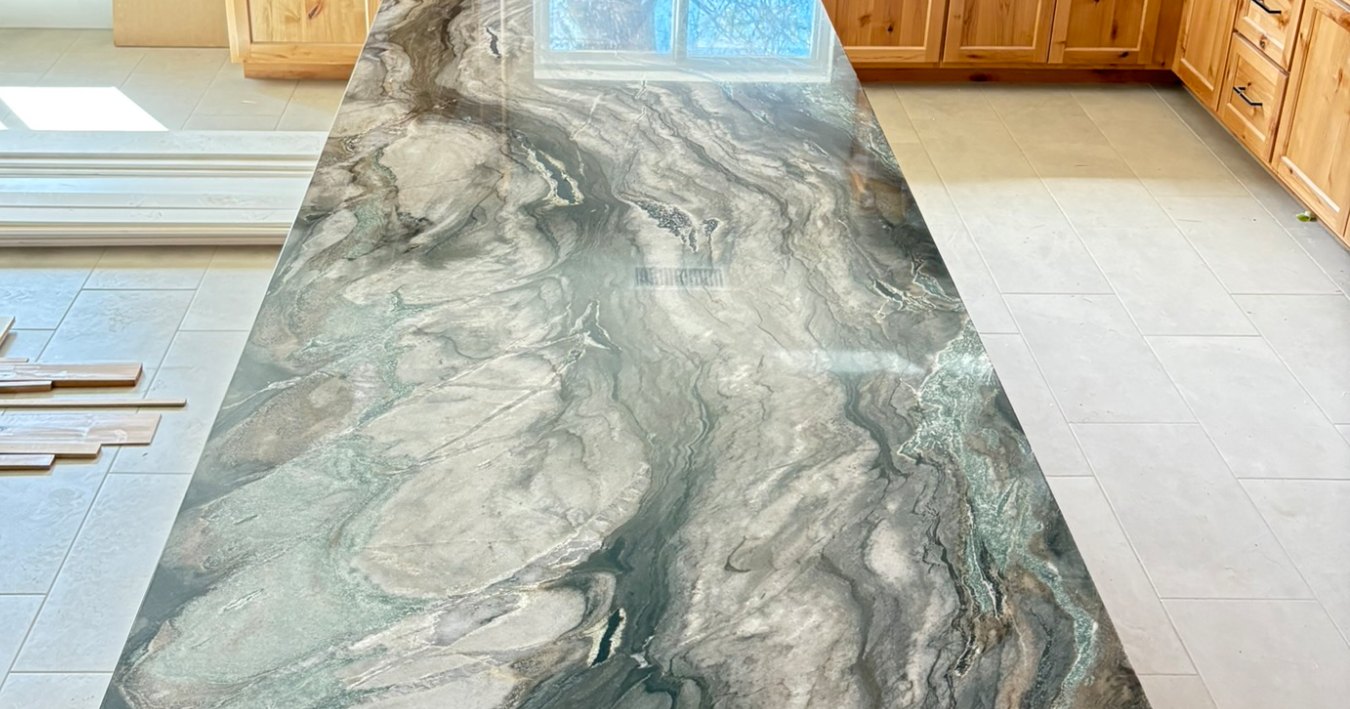
What Is the Main Difference Between Quartzite and Quartz Countertops?
In the quartzite vs quartz debate, the main difference is simple. Quartzite is a natural stone cut from the earth. Quartz is a man-made slab of ground quartz and resin. That one fact shapes cost, care, looks, and heat limits.
Both are popular, durable choices, and they can look similar in a showroom, so it helps to know how they differ before you choose.
We help homeowners pick Chico kitchen countertops. This guide gives you the plain facts. You’ll see cost, care, and trade-offs side by side. Then you can pick with confidence and request a quote.
One warning before we start. The names sound alike, and many shoppers mix them up. Quartzite is not quartz. Ask for the exact material by name when you shop and get it in writing on your quote.
Quartz vs Quartzite Countertops at a Glance
Here is a quick look at quartz vs quartzite countertops. We cover each row in detail below. Weighing granite too? Read our guide to quartz vs granite countertops.
|
Feature |
Quartzite |
Quartz |
| Material | Natural stone, formed from sandstone under heat and pressure | Ground quartz (about 90 to 94%) mixed with resin |
| Look | One-of-a-kind veining, often like marble | Even planned patterns |
| Cost | Usually higher | Usually lower |
| Sealing | Yes, test the slab first. | No |
| Heat | Handles heat well, but use a trivet. | Resin can scorch, so use a trivet every time. |
| Color choice | Limited to what nature makes | Very wide |
| Outdoor use | Yes | Not advised, because the sun can fade resin. |
Your quote will depend on the slab, the edge, and the layout.
Not sure which stone fits your kitchen? See real projects in our countertop gallery, then talk to our team.
Get Your Countertop Quote →
Quartzite Pros and Cons
Quartzite starts as sandstone. Heat and pressure deep in the earth turn it into a hard, dense rock. Let’s look at the quartzite pros and cons before you buy.
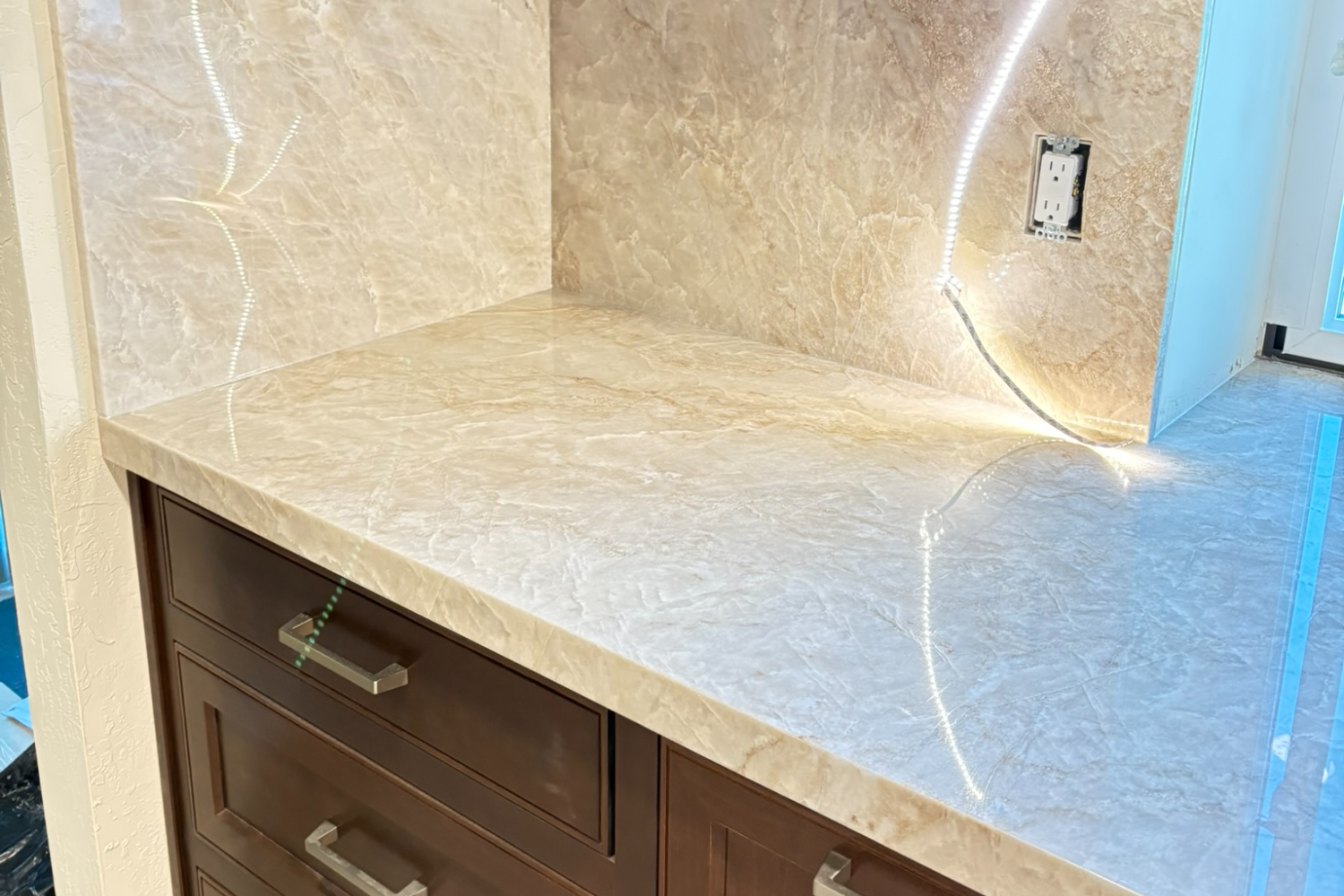
What you’ll like
- Natural beauty. Every slab is one of a kind. Many look like marble, with soft veins and deep color.
- Strength. Most true quartzite resists scratches well. It holds up to daily chopping, sliding pots, and kids’ homework.
- Heat. Natural stone has no resin to burn. It handles hot cookware better than quartz does. We still say use a trivet.
- Sun and outdoors. Sunlight does not break down natural stone the way it can break down resin. That makes quartzite a fit for patio kitchens.
- Marble look, less worry. You get the soft look of marble with more toughness.
What to watch
- Higher price. Quartzite usually costs more than quartz. Rare slabs push the price up fast.
- Sealing. It is natural stone, so it can soak up liquids. We cover this in the sealing section below.
- Fewer colors. You can only pick from what the quarry gives.
- Hard to cut. Dense stone takes more time and skill to shape. That adds to the fabrication bill.
- Mislabeled slabs. Some soft stones are sold as quartzite. Ask your fabricator to test the slab before you buy.
A reputable fabricator will show you the slab, tell you what the stone is, and test it before you buy.
Quartz Pros and Cons
Factories make quartz slabs. They mix ground quartz with resin, color, and pressure. The result is a slab with no pores and a very even look.
What you’ll like
- No sealing. The resin fills the pores. You wipe it down, and you’re done.
- Stain resistance. Wine, coffee, and oil sit on top of the slab, not in it.
- Steady color. What you see in the sample is what you get on the counter.
- Many styles. You can find white, gray, black, warm tones, and bold veining.
- Often a lower price. Most quartz lands below quartzite.
What to watch
- Heat. The resin is the weak spot. Quartz makers rate their slabs for different heat limits, and hot pans can leave marks. Use a trivet either way.
- Sun. Strong sunlight can fade or yellow resin over time. That matters in a bright room.
- No outdoor use. Keep quartz inside.
- A made-up look. Some people prefer the depth of real stone.
If you cook with high heat, this list matters. A scorch mark won’t wipe off.
Durability and Daily Care: Life with Each Stone
Both materials hold up well to daily use. Here is how they compare.
Scratches. Most true quartzite resists scratches well. Quartz is hard too. Still, use a cutting board on either one. A knife can dull the blade and leave marks.
Stains. Quartz has no pores, so spills sit on top. Quartzite can soak up a spill if the seal wears thin. Wipe up wine, coffee, and oil fast.
Chips. Edges and corners take the most hits on any stone. A dropped pot can chip a sharp edge. A softly rounded edge helps. Ask us about edge styles when you plan your layout.
Cleaning. Warm water and mild soap work on both. Skip bleach and harsh sprays. They can harm quartz resin and wear down the sealer on quartzite.
Quartzite Countertops Cost vs. Quartz: What You’ll Pay
Quartzite countertops cost more than quartz in most cases. Rare slabs push the price up fast. Premium quartz lines cost more than basic ones. The only way to get a true Chico price is a quote for your exact slab and layout.
Kitchen size also changes the total:
- Small kitchen: less stone, so a lower total.
- Large kitchen with an island: more stone, so a higher total.
We don’t list prices here, because every slab and layout is different.
What moves the price?
Four things change your total the most:
- The slab. Rare quartzite costs far more than common types. Premium quartz costs more than basic lines.
- The edge. A plain edge costs less. A sculpted edge adds cost.
- Cutouts and sinks. Each cutout takes time. An undermount sink costs more to cut than a drop-in.
- An island, a long backsplash, or many seams all raise the price.
Sealing adds a small yearly cost to quartzite. Quartz skips that cost.
Want a real number? Bring your measurements or a photo. We’ll price the exact slab you like, so you can compare quartzite and quartz in dollars. Request a quote and we’ll walk you through it.
Do Quartzite Countertops Need Sealing?
Most do. Quartzite is natural stone, and many types soak up liquids. Dense slabs may need little sealer. Quartz never needs sealing, because resin fills its pores. A simple water test tells you what your slab needs.
How to test your quartzite
- Wipe the counter clean and let it dry.
- Drop a spoonful of water on the stone.
- Wait 10 to 15 minutes.
- If the stone turns dark, it soaks up water. Seal it.
- If the water stays in a bead, you’re fine for now.
How often to seal
Advice differs. Some stone suppliers say every 6 to 12 months. Others say every 1 to 3 years. Dense slabs like the Taj Mahal absorb slowly. Softer, marble-like slabs absorb fast.
So don’t follow a calendar. Run the water test once a year. Run it again when water stops beading near the sink.
Keep it simple.
- Wipe spills fast, especially wine, oil, and lemon juice.
- Clean with warm water and a mild soap or a pH-neutral stone cleaner.
- Skip bleach and harsh sprays.
- Ask your installer to seal the slab on day one.
Sealing quartzite only takes a few minutes. If you want no sealing at all, quartz is the lower-maintenance choice.
Best Choice for Chico Kitchen Countertops
In the quartzite vs quartz choice, there is no single winner. The right pick depends on how you cook, how much you want to spend, and what you look for. Chico adds a few things to think about.
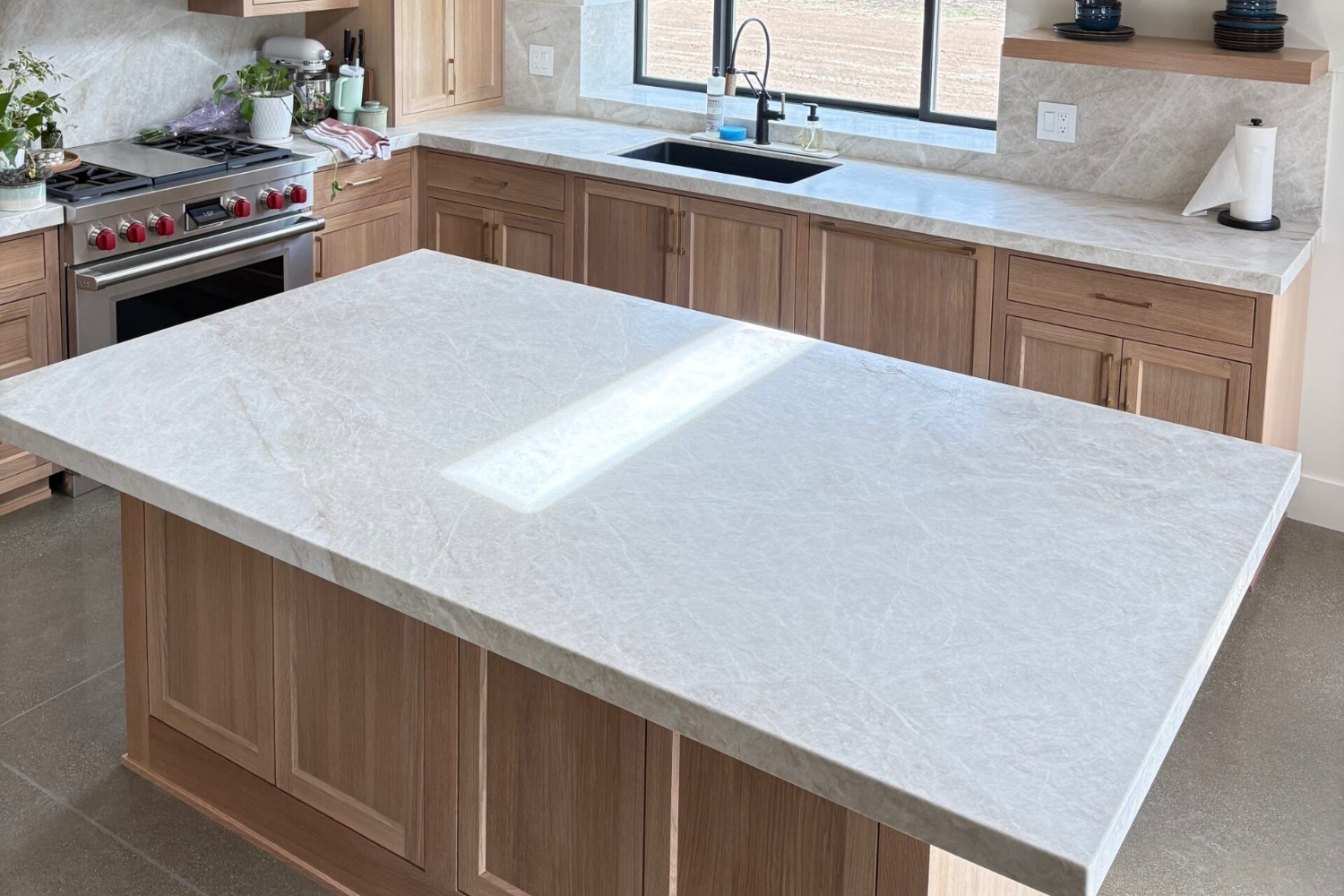
- Hot summers. Chico summers are hot and sunny, and many kitchens get strong afternoon light. Quartz near a bright window can fade over time. Quartzite doesn’t have that problem.
- Outdoor kitchens. Love to cook on the patio? Quartzite handles the sun. Quartz is for indoors.
- Busy family kitchens. Quartz is the easy-to-care-for pick. You don’t seal it, and stains stay on top.
- Heavy cooks. If you move hot pans a lot, quartzite is more forgiving.
Pick quartzite if you want.
- A natural, one-of-a-kind slab.
- Better heat and sun handling.
- A marble look with more strength.
- A countertop for the patio.
Pick quartz if you want
- No sealing and the lowest upkeep.
- A steady, planned color.
- A lower price in most cases.
- A big choice of styles.
Still weighing a third option? Read our guide to quartz vs. granite countertops. Want to see real work? Browse our countertop gallery for finished kitchens.
The best way to decide is to see the slabs in person. Stop by our Chico showroom at 11128 Midway, Suite A. Hold a sample in your hand. Put it next to your cabinets. Then contact us to book a consultation and get your quote.
Quartzite vs Quartz FAQs
Is quartzite the same as quartz?
No. Quartzite is a natural stone dug from the ground. Quartz is an engineered slab made from ground quartz and resin. The names sound alike, but the two behave differently. They differ in price, sealing needs, heat limits, and how they handle sun.
Which is better, quartzite or quartz?
Neither wins every time. Quartzite is better if you want natural stone, strong heat handling, and outdoor use. Quartz is better if you want low upkeep, steady color, and a lower price. Match the stone to how you cook and clean.
How much do quartzite countertops cost?
Quartzite usually costs more than quartz. The slab, the edge, the sink cutouts, and the layout all change the total. We price your exact kitchen, so request a quote to get a real Chico number.
Do quartzite countertops need sealing?
Usually, yes. Quartzite is natural stone, and many slabs soak up liquids. Do a water test. If the stone darkens within 10 to 15 minutes, seal it. Dense slabs may need sealing less often. Quartz needs no sealer at all.
What are the main quartzite pros and cons?
Pros: natural beauty, strength, heat handling, and sun resistance. Cons: higher cost, regular sealing, fewer colors, and tougher fabrication. Mislabeled stone is also a risk, so ask your fabricator to test the slab before you buy.
What is the best material for Chico kitchen countertops?
It depends on your kitchen. Sunny rooms, patio kitchens, and heavy cooking favor quartzite. Busy family kitchens and a tight budget favor quartz. Visit a showroom, compare slabs side by side, and ask for a written quote on each.
Ready to Pick Your Countertops? Talk to Oak Ridge
You now know the main differences. The next step is to see and touch the stone. Our team fabricates and installs quartz, quartzite and granite for homes and businesses across the North State.
Bring your kitchen plan. We’ll help you settle the quartzite vs quartz question, check the cost and book your install.
Prefer to call? Phone us at (530) 893-8774. Our hours are Monday to Friday, 7:00 AM to 3:30 PM, or by appointment.
